

A whole home remodel changes how your entire house looks, works and holds up over time. Because many rooms and building systems are involved at once, the project goes much more smoothly when you decide your goals, scope and order of work before anyone picks up a hammer. This guide explains how Houston homeowners can plan a whole home remodel, from the first walkthrough to the final inspection. Whether you call it whole home remodeling, a whole house remodel or an entire home remodel, the same planning steps apply.
The short version: inspect the house first, separate needs from wants, confirm permits, set the construction order and hire a contractor who puts everything in writing.
What Is a Whole Home Remodel?
A whole home remodel is a large renovation that updates most or all of the living spaces in a house under one coordinated plan. It can include new layouts, updated kitchens and bathrooms, new flooring, fresh electrical and plumbing, better insulation and a full cosmetic refresh. The main difference from a single room project is coordination. Work in one room often affects the rooms next to it, so the whole house is planned together.
If you are still deciding between a few upgrades and a full project, our home renovation services page explains the range of work we handle for Houston homes.
How to Start Your Whole House Remodel the Right Way
Start with the condition of the house and a clear list of goals. Finishes and paint colors come later. A whole house remodel built on unknown problems usually runs into surprises once walls are opened.

Inspect the Home Before You Design Anything
Walk through every room and note what you see. Look for stained ceilings, soft floors, cracked drywall, doors that stick, musty smells and rooms that feel too hot or too cold. Houston homes deal with heat, humidity and shifting clay soil, so these signs deserve attention before you plan new finishes on top of them.
Some issues need a specialist before design continues. A suspected foundation or framing problem should be reviewed before a wall is removed, and water damage should be traced and fixed before new flooring goes down.
Write Down Goals for the Whole Project
Your goals guide every later choice. Think about how your household lives in the house today and how that may change. Record the following:
- The rooms and areas included in the remodel.
- Repairs that must be done no matter what.
- Layout changes, such as opening a wall between the kitchen and living room.
- Storage, lighting and accessibility improvements.
- Electrical, plumbing and air conditioning updates you already know about.
- Questions you want a contractor or designer to answer.
Homeowners who want a more open floor plan can read our guide on creating an open concept living space before the first meeting with a contractor.
Which Rooms and Systems Should Be Part of an Entire Home Remodel?
An entire home remodel should include the rooms and systems that support your goals. It does not need to include every possible upgrade. A defined scope keeps the budget and schedule under control.
Sort the Work Into Four Groups
Placing each item in a group makes it easier to decide what happens first and what can wait.
| Group | Examples | When to Do It |
|---|---|---|
| Essential repairs | Water damage, unsafe wiring, structural concerns | First, before anything is covered up |
| Functional upgrades | Better layout, storage, lighting, ventilation | During design and rough work |
| Cosmetic updates | Paint, trim, light fixtures, hardware | Near the end of construction |
| Optional extras | Smart home features, specialty finishes | Only if the budget allows |
Think About How Rooms Connect
Rooms share walls, pipes, wiring and air ducts, so one change can reach further than expected. Moving a kitchen sink can affect plumbing runs and flooring in the next room. Taking out an interior wall can affect support above it. A contractor and, when needed, an engineer can check these links before the design is final.
Many whole home remodeling plans start with the two rooms that affect daily life the most. You can look at our kitchen remodeling and bathroom remodeling pages to see how those rooms are normally handled, and our master bedroom remodeling page if the primary suite is part of your plan.
How to Set Priorities and Choose Materials
Handle repairs and function first, then pick finishes. This order protects your budget because the expensive surprises usually sit behind the walls, not on them.
Use a Simple Priority Order
- Fix safety, structural and moisture problems.
- Plan electrical, plumbing and air conditioning changes.
- Solve layout and storage problems.
- Choose durable materials and fixtures.
- Finish with decorative details and optional upgrades.
This is a planning framework, not a replacement for advice about your specific house. Also set aside a contingency amount for hidden conditions. Ask your contractor how much to hold back based on the age and condition of your home instead of using a random percentage.
Match Material Choices to the Schedule
Order lead times can slow a project more than the work itself. Cabinets, windows, specialty tile and some flooring may take weeks to arrive, and the crew needs exact dimensions before they can install. Keep a written list of every selection, including product names, sizes, delivery dates and who approved them.
Flooring is one of the biggest material decisions in a whole house remodel. Our article on choosing the right flooring for your home compares the main options, and you can also review our hardwood flooring installation service if you are leaning toward wood.
For exact numbers, ask for a written estimate based on your plans. General price guesses rarely match a real house.
How to Coordinate Design, Permits and Construction
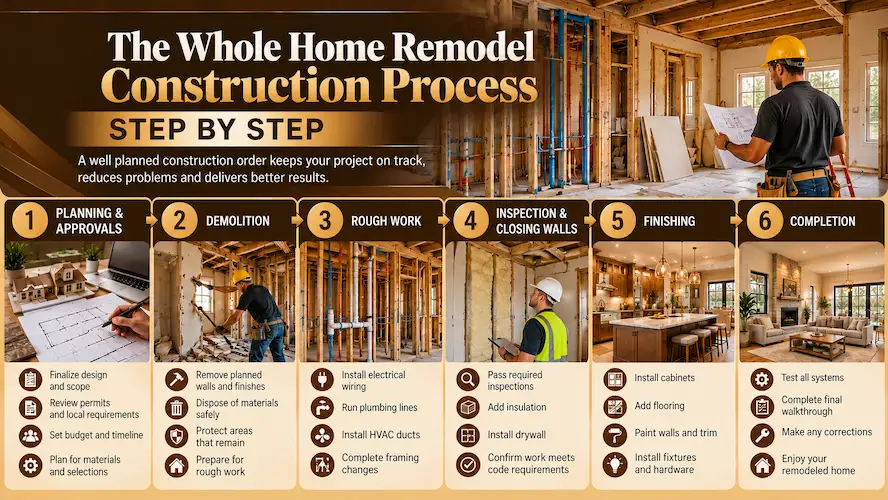
Good coordination means design decisions are finished before demolition, approvals are in place before regulated work starts, and each trade works in the right order.
Finish the Design and Technical Details
Before demolition, confirm the layout, the material list and the written scope. Projects that move walls, relocate plumbing or change air conditioning may need drawings. Our architectural services can help turn your ideas into plans that contractors can price accurately.
If you want help with window and door positions, read about natural light and window placement before the design is locked in.
Confirm Permits and Inspections
Permit rules depend on where your property is and what work you plan to do. Homes inside the City of Houston usually deal with the City of Houston Permitting Center, while homes in other cities or unincorporated areas may follow different rules. Check with the correct building office before work begins, and ask your contractor to explain who handles each application.
Before construction starts, make sure you know:
- Which permits and inspections apply to your work.
- Who prepares and submits the paperwork.
- Which approvals are needed before certain work can start.
- How inspections may affect the schedule.
Follow the Right Order of Work
Sequencing keeps one trade from damaging another trade’s finished work. A common order looks like this, although your house may differ.
| Stage | Main Activities |
|---|---|
| 1. Preparation | Planning, approvals, protecting floors and furniture |
| 2. Demolition | Removing planned walls, fixtures and finishes |
| 3. Rough work | Framing changes, plumbing, electrical and air conditioning lines |
| 4. Inspection and closing walls | Required checks, insulation and drywall |
| 5. Finishing | Cabinets, flooring, paint, fixtures and trim |
| 6. Completion | Testing, corrections and final walkthrough |
For a room by room breakdown, see our guide on the order of work for Houston remodels. When walls are open, it is also a good time to improve insulation and temperature control, which matters in a hot climate.
What Houston Homeowners Should Check Before Remodeling
Houston homeowners should confirm the property’s jurisdiction, look into visible building concerns and review private restrictions before construction. Local conditions can change both the design and the schedule.
Use this checklist before you sign a contract:
- Property condition: Investigate leaks, cracks, soft spots and deteriorated materials.
- Drainage and moisture: Look for water intrusion and poor drainage before covering any area.
- Flood risk: Check FEMA flood maps for your address if your project involves lower floors or changes to the structure.
- Private restrictions: Review HOA rules and deed restrictions, especially for exterior changes.
- Accessibility needs: Decide whether wider doors, step free entries or other features should be built in now.
Planning for long term comfort is easier now than later, and our article on universal design and home accessibility explains what to consider.
How to Choose a Contractor for a Whole Home Remodel
Choose a contractor who understands the full scope, explains what is excluded and has a clear process for coordinating trades and changes. In whole home remodeling, one decision in one room can affect work in another, so steady communication matters.

Compare Proposals Line by Line
Do not compare only the total price. Two proposals can look similar while covering very different work. Ask each contractor:
- Which rooms and tasks are included?
- Which materials and finish levels are covered?
- Who coordinates subcontractors and inspections?
- How are hidden problems documented and priced?
- What assumptions does the schedule depend on?
- Can you see references or completed projects?
Our guide on how to find a kitchen remodeling contractor includes questions that also work for larger projects.
Agree on Changes and Records in Writing
Your contract should explain how updates, payments and changes are handled. If demolition reveals hidden damage, the contractor should document it, explain the fix and describe the effect on cost and schedule. Keep plans, selections, change orders, warranties and receipts in one folder.
How to Prepare Your Family for the Remodel
Decide early how you will live in the house, or away from it, while work is underway. When several rooms are being renovated, daily routines change a lot.
Before work begins:
- Move furniture and valuables out of work areas.
- Arrange secure storage for items that could be damaged.
- Agree on worker access, parking and site protection.
- Ask about planned water, power and air conditioning interruptions.
- Keep children and pets away from active work zones.
- Plan temporary living space if the kitchen or bathrooms will be unusable.
Set a regular time each week to review progress, upcoming work and pending decisions. At the end, compare the finished work to the written scope, test fixtures, list any corrections and collect manuals and warranties.
If you are also thinking about extra living space during the same project, our room additions and garage conversions pages show what else can be coordinated with a whole house remodel. A fresh finish at the end is also easier when handled by a painting contractor who is scheduled with the rest of the crew.
Frequently Asked Questions About Whole Home Remodeling
How long does a whole home remodel take?
The timeline depends on the size of the house, the amount of structural work, permit timing and material delivery. Smaller cosmetic projects finish faster than projects that move walls and rebuild kitchens and bathrooms. Ask your contractor for a written schedule based on your plans, and ask what could cause delays.
Can you live at home during a whole house remodel?
Sometimes. It depends on which rooms are being worked on, whether you keep a working kitchen and bathroom, and whether dust and noise are manageable. Extensive demolition or long utility shutoffs often make a temporary place to stay the better choice.
Do you need permits for an entire home remodel in Houston?
Many projects need permits, especially when work involves structure, electrical, plumbing or air conditioning. Requirements depend on the property location and the scope of work, so confirm them with the local building office and ask your contractor who will handle the applications.
Should you buy materials before hiring a contractor?
It is usually better to settle the scope and talk with your contractor first. Sizes, delivery dates and installation needs affect the work, and a wrong purchase is hard to fix. Agree in writing on who selects, buys, receives and inspects each material.
What should a whole home remodeling contract include?
It should list the scope of work, materials, payment schedule, responsibilities, schedule assumptions, change order process, inspections and warranty terms. It should also state what is not included, so there are no surprises later.
Ready to Plan Your Whole Home Remodel in Houston?
A good whole home remodel comes from clear goals, a realistic scope, the right order of work and a contractor you can communicate with. Houston homeowners also need to check property conditions, permits and neighborhood rules before construction starts, so the plan fits the actual house.
If you are ready to talk about your project, Houston Construction Pro serves the Greater Houston area and can review your goals and help you decide on the next planning steps. Start with our home renovation page to see how we work.