

General home remodeling is the work that improves an existing house without rebuilding it. It covers new finishes, updated kitchens and bathrooms, reworked layouts, and repairs to the electrical, plumbing, and cooling systems behind the walls. If your Houston home feels dated, cramped, or costly to maintain, a clear plan helps you spend money on the right changes. Houston Construction Pro works with homeowners across the Greater Houston area, and this guide explains how a typical home remodeling project is planned, permitted, and built.
Quick answer: For general home remodeling, fix repairs first, improve how each room works second, and add finishes last. Confirm permit rules with the city, then sign a written scope before demolition starts.
What Does General Home Remodeling Include?
General home remodeling includes interior upgrades, room level improvements, layout changes, and repairs or upgrades to electrical, plumbing, and HVAC systems when the work requires them. The scope depends on the condition of the home, your goals, and how much construction sits behind the finished surfaces.
- Interior finishes: flooring, paint, doors, trim, and lighting.
- Kitchen work: cabinets, countertops, storage, and layout changes.
- Bathroom work: fixtures, ventilation, waterproofing, and better use of space.
- Layout changes: moving or removing interior walls where the structure allows it.
- Building systems: electrical, plumbing, and HVAC repairs or upgrades.
- Whole house updates: coordinating several rooms so the finished home feels consistent.
Repainting a room is simple. Moving plumbing or taking out a load bearing wall is not, because it needs engineered plans, permits, and licensed trades. A home remodeling construction project of that size usually moves through demolition, framing, rough in work, inspections, and finishes, in that order. When three or more rooms are involved, a full home renovation scope is usually easier to manage than several separate small jobs.
How Do You Prioritize a General Home Remodeling Project?
Prioritize a home remodeling project by fixing safety and repair problems first, improving how the house functions second, and choosing decorative upgrades last. This order keeps your budget on the work that protects the home.
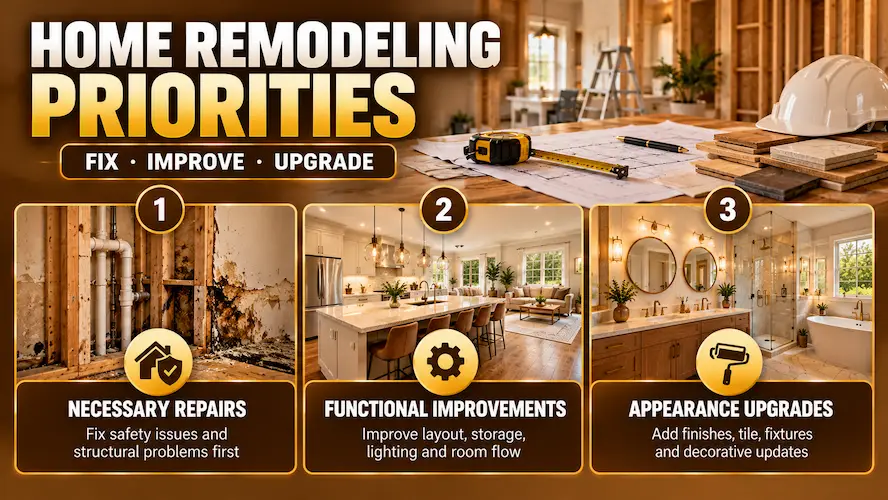
- Necessary repairs: active leaks, damaged framing, rot, failing wiring or plumbing, and signs of foundation work being needed.
- Functional improvements: storage, lighting, room flow, and accessibility.
- Appearance upgrades: paint, tile, fixtures, and other finishes.
Next, decide which tasks must happen together. New floors installed before dusty wall or ceiling work will get damaged, and a new kitchen layout affects outlets, plumbing, lighting, and cabinets all at once. Our guide to the order of work room by room in Houston shows how to sequence these tasks.
Build the budget from the full scope, not only the materials. Include design fees, labor, debris removal, permit fees, and a contingency. Many contractors suggest setting aside 10 to 20 percent for surprises, which is sensible because general home remodeling in older Houston houses often uncovers hidden damage. If you plan major layout changes, architectural services can produce drawings that make pricing more accurate.
Which General Home Remodeling Approach Fits Your House?
The right general home remodeling approach depends on whether you need to fix one room, update several spaces together, or gain more living area. Matching the scope to the problem keeps you from paying for work you do not need.
| Project type | Best for | What to check |
|---|---|---|
| Single room remodel | One room is outdated or hard to use | Keep the scope focused on that room |
| Multi room remodel | Several connected spaces need updates | Match materials and coordinate trades |
| Whole home remodel | Most rooms need major work | Plan one schedule and one budget |
| Home addition | The current footprint cannot fit your needs | Design, soil, setbacks, deed restrictions, and permits |
| Garage or attic conversion | Unused space can become living area | Structure, ceiling height, cooling, and exits |

If cooking space and storage are your main complaints, kitchen remodeling may be enough, and kitchen cabinet refacing works when the existing cabinet boxes are in good shape. For bathrooms, bathroom remodeling can improve layout, ventilation, waterproofing, and fixtures without touching the rest of the house.
When the real problem is a lack of space, an addition may make more sense than renovating what you already have. Room additions add one new space, while second story additions build up instead of out, which helps on tight lots. Our article on bump out vs second story options in Houston compares the two.
Existing square footage can also work harder. Garage conversions and attic conversions turn unused areas into bedrooms, offices, or play rooms, as long as the structure, ceiling height, cooling, and exits meet requirements.
What Should Houston Homeowners Check Before Remodeling?
Before any home remodel service begins work, check permit rules, foundation condition, moisture, flood exposure, and deed restrictions. These factors change from address to address, so what applies to one property may not apply to another.

- Permits: The City of Houston generally requires permits for structural, electrical, plumbing, and mechanical work, while cosmetic jobs such as painting often do not. Confirm your project with the Houston Permitting Center. Homes in other cities or in unincorporated Harris County follow different offices.
- Foundation: Houston’s expansive clay soil shifts as moisture changes. Cracks, sticking doors, or uneven floors should be evaluated by a qualified professional before walls are moved.
- Moisture: Plumbing leaks, damp materials, and roof problems should be fixed before new drywall or flooring covers them. If water is coming from above, start with roofing services.
- Flood exposure: Check the FEMA flood map for your address. Properties in a floodplain can face extra elevation rules when the cost of work reaches a set share of the home’s value, so ask the city before finalizing the scope.
- Deed restrictions and HOA rules: Houston has no traditional zoning, so deed restrictions often control additions, setbacks, and exterior changes.
- Existing systems: Older homes may have outdated wiring, aging pipes, or undersized cooling equipment that the project needs to address.
Do not assume every general home remodeling project needs a permit, or that interior work is always exempt. Asking early helps you avoid stop work orders, redesigns, and surprise costs.
How Do You Choose a Home Remodel Service in Houston?
Choose a home remodel service that gives you a written scope, explains how trades and deliveries will be coordinated, and is open about cost, schedule, and changes. Comparing those details tells you more than the lowest price does.
Ask each contractor these questions before you sign:
- What work is included in the proposal, and what is excluded?
- Who coordinates subcontractors and material deliveries?
- Which permits and inspections apply to this project?
- Can you provide proof of general liability insurance and local references?
- How will hidden damage or unexpected repairs be priced?
- How are changes to scope, cost, or schedule approved?
Texas does not issue a statewide general contractor license, but electricians, plumbers, and HVAC technicians are licensed by the state. Ask for license numbers for those trades and verify them with the issuing agency.
Ask each contractor about their experience with general home remodeling of your size, since cosmetic specialists may not handle structural work. Compare estimates using the same scope. A lower quote may leave out demolition, disposal, or surface preparation that another contractor included. Even small general home remodeling jobs should have a contract that states the scope, material selections or allowances, payment schedule, timeline, and change order process. Ask for lien waivers with each payment so suppliers and subcontractors are accounted for. If your project starts in the kitchen, read how to find a kitchen remodeling contractor for more specific questions.
What Should Be Ready Before Construction Starts?
Before construction starts on general home remodeling, you should have an agreed scope, final design decisions, a signed contract, and a plan for access and household disruption. Preparing these items reduces delays once work begins.
- Property assessment: review current conditions and list the problems the project must solve.
- Design and selections: confirm layouts, finishes, and fixtures, since late changes are expensive.
- Approvals: identify which permits and inspections apply and schedule them.
- Scheduling: coordinate crews, material deliveries, and access to work areas.
- Home preparation: move or cover belongings, plan for dust and noise, and arrange alternatives if a kitchen or bathroom will be out of service.
Before demolition, photograph existing conditions and agree on how hidden damage will be reported. Keep copies of the contract, approved changes, product selections, and permit or inspection records. If the house is too far gone to remodel sensibly, new construction homes may be worth comparing against the cost of a major remodel.
Frequently Asked Questions
Can general home remodeling be done in phases?
Yes. Phasing works well when repairs and system upgrades come first and finishes follow. Discuss phase boundaries and costs with your contractor, because splitting work can add mobilization costs, while combining related tasks can reduce repeated labor and disruption.
How long does a home remodel take?
It depends on scope. A single bathroom often takes a few weeks, while a whole home remodel can take several months. Permit review, material lead times, and hidden damage are the most common causes of delay, so ask for a written schedule.
What should you do if hidden damage appears during demolition?
Ask the contractor to explain the problem, the safety impact, and the repair options before work continues. Request a written change order showing the new scope, cost, and schedule. Structural issues may need an engineer’s review first.
What should a home remodeling contract include?
It should include the scope, exclusions, material selections or allowances, payment terms, expected schedule, and the change order process. Put important verbal agreements in writing, and read any unclear language before signing.
Does every general home remodeling project in Houston need a permit?
No, but many do. Structural, electrical, plumbing, and mechanical changes commonly require permits, while simple cosmetic updates often do not. Check with the permitting office for your address before work begins.
Final Thoughts on General Home Remodeling
Good general home remodeling starts with essential repairs, a focused scope, and local requirements checked before construction. Clear written agreements and steady communication with your contractor prevent most surprises. If you are planning work on one room or the whole house, contact Houston Construction Pro to talk through your goals, your property, and the scope that fits them.